• Frequencies

  • Facebook

  • Instagram

  • Home
  • Shows
    • Two Guys Named Chris
    • Crash
    • Live In Concert: Hosted by Lisa Berigan
    • Time Warp with Bill St. James
  • Contests
    • Contest Rules
  • Features
    • Recipes
    • News, Sports and Weather
    • Crossword Puzzle
    • Sudoku
    • Horoscopes
    • Slideshows
    • Pet Adoption
    • Daily Comic Strips
    • Coupons
    • Advice
  • Events
    • Community Events
    • Submit Your Community Event
  • Connect
    • Contact and Directions
    • Sign Up For Emails
    • Advertising
    • Social Media
      • Facebook
      • Instagram
  • Podcasts
  • search
Supreme Court issues emergency order to block full SNAP food aid payments

Supreme Court issues emergency order to block full SNAP food aid payments

By DAVID A. LIEB, MICHAEL CASEY, SCOTT BAUER and MIKE CATALINI Associated Press

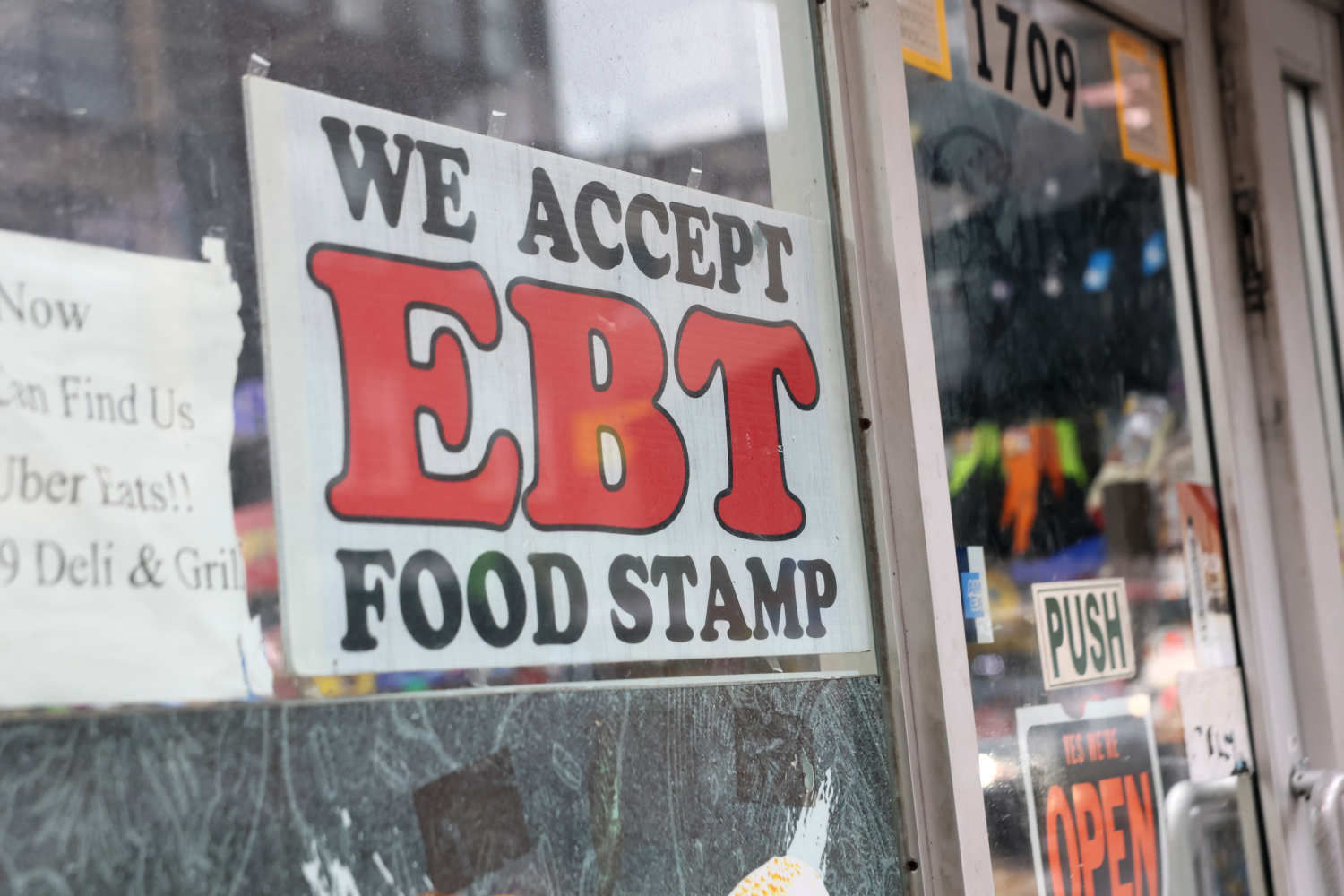
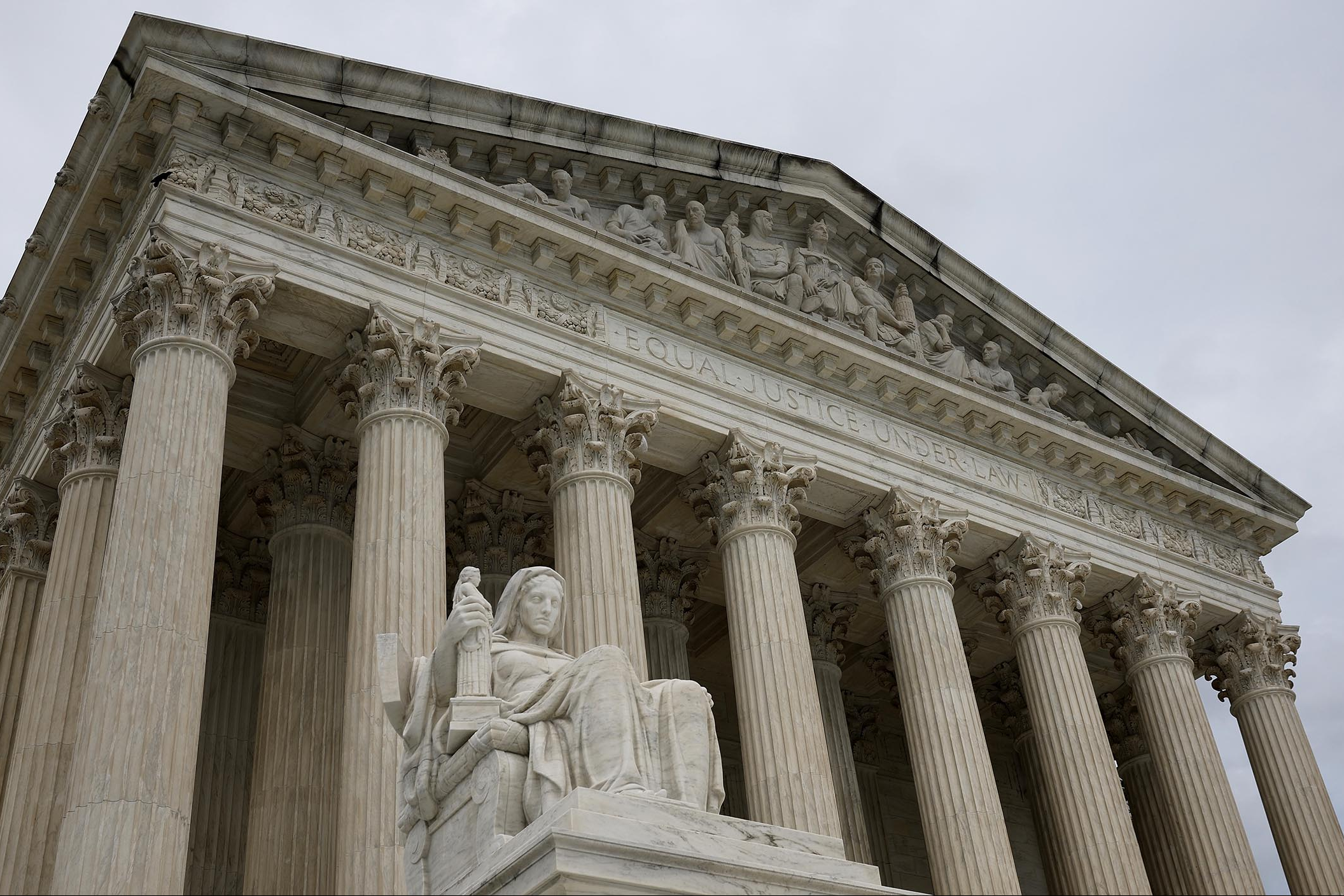
BOSTON (AP) — The Supreme Court on Friday granted the Trump administration’s emergency appeal to temporarily block a court order to fully fund SNAP food aid payments amid the government shutdown, even though residents in some states already have received the funds.

A judge had given the Republican administration until Friday to make the payments through the Supplemental Nutrition Assistance Program. But the administration asked an appeals court to suspend any court orders requiring it to spend more money than is available in a contingency fund, and instead allow it to continue with planned partial SNAP payments for the month.

After a Boston appeals court declined to immediately intervene, Supreme Court Justice Ketanji Brown Jackson issued an order late Friday pausing the requirement to distribute full SNAP payments until the appeals court rules on whether to issue a more lasting pause. Jackson handles emergency matters from Massachusetts.

Her order will remain in place until 48 hours after the appeals court rules, giving the administration time to return to the Supreme Court if the appeals court refuses to step in.

The food program serves about 1 in 8 Americans, mostly with lower incomes.

Officials in more than a half-dozen states confirmed that some SNAP recipients already were issued full November payments on Friday. But Jackson’s order could prevent other states from initiating the payments.

Which states issued SNAP payments

In Wisconsin, more than $104 million of monthly food benefits became available at midnight on electronic cards for about 337,000 households, a spokesperson for Democratic Gov. Tony Evers said. The state was able to access the federal money so quickly by submitting a request to its electronic benefit card vendor to process the SNAP payments within hours of a Thursday court order to provide full benefits.

Oregon Gov. Tina Kotek, a Democrat, said state employees “worked through the night” to issue full November benefits “to make sure every Oregon family relying on SNAP could buy groceries” by Friday.

Hawaii had the information for November’s monthly payments ready to go, so it could submit it quickly for processing after Thursday’s court order — and before a higher court could potentially pause it, Joseph Campos II, deputy director of Hawaii’s Department of Human Services, told The Associated Press.

“We moved with haste once we verified everything,” Campos said.

Trump’s administration told the Supreme Court that the fast-acting states were “trying to seize what they could of the agency’s finite set of remaining funds, before any appeal could even be filed, and to the detriment of other States’ allotments.”

“Once those billions are out the door, there is no ready mechanism for the government to recover those funds,” Solicitor General D. John Sauer wrote in the court filing.

Officials in California, Kansas, New Jersey, Pennsylvania and Washington state also said they moved quickly to issue full SNAP benefits Friday, while other states said they expected full benefits to arrive over the weekend or early next week. Still others said they were waiting for further federal guidance.

Many SNAP recipients face uncertainty

The court wrangling prolonged weeks of uncertainty for Americans with lower incomes.

An individual can receive a monthly maximum food benefit of nearly $300 and a family of four up to nearly $1,000, although many receive less than that under a formula that takes into consideration their income.

For some SNAP participants, it remained unclear when they would receive their benefits.

Jasmen Youngbey of Newark, New Jersey, waited in line Friday at a food pantry in the state’s largest city. As a single mom attending college, Youngbey said she relies on SNAP to help feed her 7-month-old and 4-year-old sons. But she said her account balance was at $0.

“Not everybody has cash to pull out and say, ‘OK, I’m going to go and get this,’ especially with the cost of food right now,” she said.

Later Friday, Youngbey said, she received her monthly SNAP benefits.

The legal battle over SNAP takes another twist

Because of the federal government shutdown, the Trump administration originally had said SNAP benefits would not be available in November. However, two judges ruled last week that the administration could not skip November’s benefits entirely because of the shutdown. One of those judges was U.S. District Judge John J. McConnell Jr., who ordered the full payments Thursday.

In both cases, the judges ordered the government to use one emergency reserve fund containing more than $4.6 billion to pay for SNAP for November but gave it leeway to tap other money to make the full payments, which cost between $8.5 billion and $9 billion each month.

On Monday, the administration said it would not use additional money, saying it was up to Congress to appropriate the funds for the program and that the other money was needed to shore up other child hunger programs.

Thursday’s federal court order rejected the Trump administration’s decision to cover only 65% of the maximum monthly benefit, a decision that could have left some recipients getting nothing for this month.

In its court filings Friday, Trump’s administration contended that the judge usurped both legislative and executive authority in ordering SNAP benefits to be fully funded.

“This unprecedented injunction makes a mockery of the separation of powers,” Sauer told the Supreme Court.

States are taking different approaches to food aid

Some states said they stood ready to distribute SNAP money as quickly as possible.

Colorado and Massachusetts said SNAP participants could receive their full November payments as soon as Saturday. New York said access to full SNAP benefits should begin by Sunday. New Hampshire said full benefits should be available by this weekend. Arizona and Connecticut said full benefits should be accessible in the coming days.

Officials in North Carolina said they distributed partial SNAP payments Friday and full benefits could be available by this weekend. Officials in Illinois, Kentucky, Louisiana and North Dakota also said they distributed partial November payments.

Amid the federal uncertainty, Delaware’s Democratic Gov. Matt Meyer said the state used its own funds Friday to provide the first of what could be a weekly relief payment to SNAP recipients.

___

Lieb reported from Jefferson City, Missouri; Bauer from Madison, Wisconsin; and Catalini from Newark, New Jersey. Associated Press writers Mark Sherman in Washington; Sara Cline in Baton Rouge, Louisiana; Jack Dura in Bismarck, North Dakota; Sejal Govindarao in Phoenix; Susan Haigh in Norwich, Connecticut; Heather Hollingsworth in Mission, Kansas; Anthony Izaguirre in New York; Jennifer Kelleher in Honolulu; Mingson Lau in Claymont, Delaware; John O’Connor, in Springfield, Illinois; Gary D. Robertson in Raleigh, North Carolina; Colleen Slevin in Denver; and Tassanee Vejpongsa in Philadelphia contributed to this report.


Wilson, Veesaar, Trimble power No. 25 North Carolina’s 2nd-half push to beat No. 19 Kansas 87-74

Wilson, Veesaar, Trimble power No. 25 North Carolina’s 2nd-half push to beat No. 19 Kansas 87-74

By AARON BEARD AP Basketball Writer

CHAPEL HILL, N.C. (AP) — Freshman Caleb Wilson had 24 points, big man Henri Veesaar added 20 and No. 25 North Carolina dominated the second half to pull away from No. 19 Kansas 87-74 in Friday night’s battle of college basketball bluebloods.

Senior Seth Trimble added 13 of his 17 after halftime, proving to be a catalyst for the Tar Heels (2-0) in taking control of the second-half tempo as UNC roared out of the break.

North Carolina made 18 of its first 23 second-half shots — including back-to-back push-the-tempo scores by Trimble that had Kansas coach Bill Self first waving his hands in frustration and then burning a quick timeout barely two minutes in.

Kyan Evans added 12 points after a scoreless first half for the Tar Heels, who went from shooting 33% before the break to making 24 of 36 shots (66.7%) after halftime to lead by as many as 16 on the way to scoring 58 second-half points.

That 58-point output was tied for the second-most allowed in any half by Kansas under its 23rd-year coach, according to SportRadar.

Kansas star freshman Darryn Peterson had 22 points to lead the Jayhawks (1-1), who led by 10 in the first half and 37-29 at the break.

The Jayhawks entered Friday having won five straight meetings between programs with a combined 10 NCAA titles, including in the 2008 Final Four, the 2012 NCAA Elite Eight and the 2022 national championship game. The Jayhawks won last year’s meeting at Allen Fieldhouse despite blowing a 20-point lead and were playing their first game in Chapel Hill.

Up next

Kansas: The Jayhawks return home to face Texas A&M-Corpus Christi on Tuesday.

UNC: The Tar Heels continue a five-game homestand to open the season with Tuesday’s visit from Radford.

___

This story has been corrected to show UNC’s ranking is No. 25, not No. 24.

November 8th 2025

November 8th 2025

Thought of the Day

Photo by Getty Image

You don’t have to see the whole staircase to take the first step.

The shutdown has disrupted air travel. Will that drive a surge in car rentals and train bookings?

The shutdown has disrupted air travel. Will that drive a surge in car rentals and train bookings?

By WYATTE GRANTHAM-PHILIPS AP Business Writer

NEW YORK (AP) — The U.S. government shutdown has rattled air travel — most recently with an unprecedented effort from the Federal Aviation Administration to cut flights by 10% at airports nationwide. And the disruptions are causing some to instead hit the road or buy a train ticket.

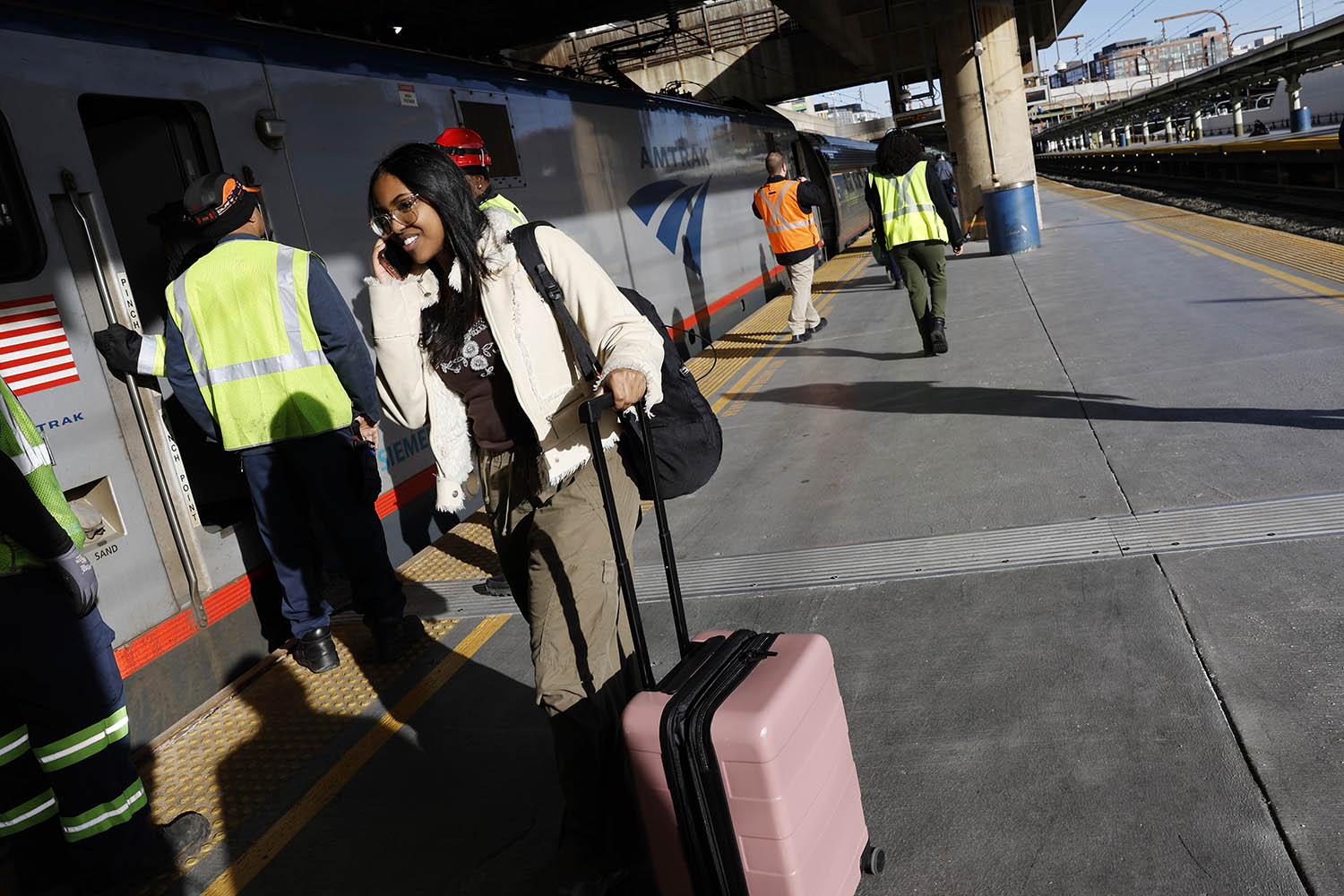
That could mean more business for car rentals, long-haul buses and commuter rails like Amtrak — particularly if flight delays and cancellations continue piling up as the U.S. approaches Thanksgiving and other peak holiday travel.

Amid the latest scramble, Hertz is already reporting a sharp increase in one-way car rentals. One-way reservations have spiked more that 20% through the coming weekend compared with the same period last year, according to the company, which has also pointed to the shutdown’s ongoing strain on travel overall.

“We join the airlines in urging Congress to swiftly pass a clean continuing resolution and restore certainty for travelers,” Hertz CEO Gil West said in a statement. “Every day of delay creates unnecessary disruption.”

A press contact for peer-to-peer car-sharing company Turo said Friday that the platform’s nationwide bookings were also up 30% year-over-year. And Avis simiarly noted it had also seen “an increase in one-way rental activity as airlines adjust flight schedules,” maintaining that it would continue “to serve customers in the best way possible as travel conditions evolve.”

Amtrak, meanwhile, is predicting record Thanksgiving numbers.

The rail service said it began to see those bookings grow before the shutdown began — but told The Associated Press on Thursday that it was also “reasonable to expect an increased share shift to Amtrak” if flight disruptions mount. Amtrak has maintained that its routes are running normally amid the shutdown.

Flix North America, the parent company of FlixBus and Greyhound, is also preparing for more demand.

“Our message is simple: you still have options,” said Kai Boysan, CEO of Flix North America.

Boysan maintained that intercity buses are “one of the most dependable ways to get around” — and not impacted by the shutdown like flights are. “We anticipate more travelers may turn to ground transportation in the days ahead, and we’re monitoring demand closely and prepared to add capacity where needed to ensure people can keep moving,” he added.

A Flix spokesperson said Friday that many of its bookings typically occur within 24 to 72 hours of departure, noting that the company should have a “clearer picture” of the overall impact in the coming days.

Still, train and bus routes are sometimes more available in certain parts of the country than others. And some have also encountered sold-out tickets or rentals in recent days — instead turning to other creative options.

Karen Soika from Greenwich, Connecticut, found out Friday morning that her flight out of Newark, New Jersey, was rebooked for an hour earlier. But she later learned her plane was actually leaving from New York’s John F. Kennedy International Airport instead, at least an hour away.

She unsuccessfully tried to book a rental car to get to Utah for a weekend trip, before settling on another option: booking a U-Haul.

“I’m going to U-Haul and I’m going to drive a truck cross country,” said Soika.

Meanwhile, others are hoping to avoid lengthy alternatives.

Christina Schlegel, of Arlington, Virginia, is keeping an eye on the Wednesday flight she’s booked to Fort Lauderdale, Florida. When word of cancellations broke, her husband suggested they just drive if their flight is among those affected, but Schlegel says she’d rather pivot to a different flight or airport.

“I don’t want to drive 12 hours,” said Schlegel, who is heading to Florida ahead of a Bahamas cruise.

It can be overwhelming for travelers to navigate whether or not their trips will be impacted — particularly if the trip is farther down the road. And the costs of buying backup options can add up overall. That’s caused some to sit on their current bookings.

“Everything is so fluid right now that many travelers are taking a ‘wait and see’ approach, especially looking ahead to Thanksgiving travel,” Aixa Diaz, spokesperson for motor group AAA, said in a Friday email.

Diaz urges consumers to stay informed, make flexible backup plans and take steps to reduce future headaches — such as carving out more travel time overall or taking a taxi or public transport to an airport instead of parking your own car, in case your return trip gets canceled or rerouted.

“Controlling what you can is key,” she noted.

_______

Associated Press journalists Matt Sedensky and Charles Sheehan in New York; Rio Yamat in Las Vegas and Ted Shaffrey in New Jersey contributed to this report.

Farmers’ Almanac says it will cease publication after 208 years, citing financial challenges

Farmers’ Almanac says it will cease publication after 208 years, citing financial challenges

A 208-year-old publication that farmers, gardeners and others keen to predict the weather have relied on for guidance will be publishing for the final time.

Farmers’ Almanac said Thursday that its 2026 edition will be its last, citing the growing financial challenges of producing and distributing the book in today’s “chaotic media environment.” Access to the online version will cease next month.

The Maine-based publication, not to be confused with the even older Old Farmer’s Almanac in neighboring New Hampshire, was first printed in 1818. For centuries it’s used a secret formula based on sunspots, planetary positions and lunar cycles to generate long-range weather forecasts.

The almanac also contains gardening tips, trivia, jokes and natural remedies, like catnip as a pain reliever or elderberry syrup as an immune booster. But its weather forecasts make the most headlines.

Both publications were among hundreds of almanacs that served a nation of farmers over two centuries ago. Most were regional publications and no longer exist.

“It is with a heavy heart that we share the end of what has not only been an annual tradition in millions of homes and hearths for hundreds of years, but also a way of life, an inspiration for many who realize the wisdom of generations past is the key to the generations of the future,” Editor Sandi Duncan said in a statement.

Readers, saddened to hear the news, posted online about how they used it in their families for generations as a guide to help them plant gardens and follow the weather.

In 2017, when Farmers’ Almanac reported a circulation of 2.1 million in North America, its editor said it was gaining new readers among people interested in where their food came from and who were growing fresh produce in home gardens. It developed followers online and sent a weekly email to readers in addition to its printed editions.

Many of these readers lived in cities, prompting the publication to feature skyscrapers as well as an old farmhouse on its cover.

The Farmers’ Almanac was founded by David Young in New Jersey before moving to Maine in 1955. The Old Farmer’s Almanac is believed to be the oldest continually published periodical in North America.

Among Farmers’ Almanac articles from the past is one urging folks to remember “old-fashioned neighborhoodliness” in the face of newfangled technology like cars, daily mail and telephones in 1923. Editors urged readers in 1834 to abandon tobacco and in 1850 promoted the common bean leaf to combat bedbugs.

The almanac had some forward-thinking advice for women in 1876, telling them to learn skills to avoid being dependent on finding a husband. “It is better to be a woman than a wife, and do not degrade your sex by making your whole existence turn on the pivot of matrimony,” it counseled.

Lemon Asparagus

Lemon Asparagus

This side is quick and easy, and goes well with chicken, steak, or fish!

Ingredients

  • 1 bunch fresh asparagus (about 1 lb), trimmed
  • 1 tbsp olive oil
  • 1 tbsp butter
  • 2 garlic cloves, minced
  • 1 lemon (zested and juiced)
  • Salt and pepper, to taste
  • Optional garnish: grated Parmesan or red pepper flakes

Instructions

1. Prep the asparagus
Trim the woody ends from the asparagus (about 1–2 inches) and pat dry.

2. Cook the garlic
Heat olive oil and butter in a large skillet over medium heat. Add garlic and sauté 30 seconds until fragrant.

3. Add asparagus
Place the asparagus in the skillet in a single layer. Then, cook for 4–6 minutes, stirring occasionally, until bright green and tender-crisp.

4. Add the lemon
Squeeze lemon juice over the asparagus, sprinkle in the zest, and toss to coat. Then, season with salt, pepper and (optional) red pepper flakes. Sprinkle with parmesan for extra flavor.

5. Serve and enjoy
Serve warm and enjoy as a side to your favorite protein!

November 7th 2025

November 7th 2025

Thought of the Day

Photo by Getty Image

Education is the key to unlock the golden door of freedom.

Federal judge orders Trump administration to fully fund SNAP benefits in November

Federal judge orders Trump administration to fully fund SNAP benefits in November

By GEOFF MULVIHILL and MICHAEL CASEY Associated Press

A federal judge in Rhode Island ordered the Trump administration Thursday to find the money to fully fund SNAP benefits for November, a decision that the administration promptly appealed.

The ruling by U.S. District Judge John J. McConnell Jr. gave President Donald Trump’s administration until Friday to make the payments through the Supplemental Nutrition Assistance Program, though it’s unlikely the 42 million Americans — about 1 in 8, most of them in poverty — will see the money on the debit cards they use for groceries nearly that quickly.

The order was in response to a challenge from cities and nonprofits complaining that the administration was only offering to cover 65% of the maximum benefit, a decision that would have left some recipients getting nothing for this month.

“The defendants failed to consider the practical consequences associated with this decision to only partially fund SNAP,” McConnell said in a ruling from the bench after a brief hearing. “They knew that there would be a long delay in paying partial SNAP payments and failed to consider the harms individuals who rely on those benefits would suffer.”

McConnell was one of two judges who ruled last week that the administration could not skip November’s benefits entirely because of the federal shutdown.

Shortly after the judges’ rulings, lawyers for the Trump administration filed a motion to appeal, contesting both Thursday’s decision and the earlier one last Saturday that ordered the federal government to use emergency reserves to fund the food program throughout November.

Vice President JD Vance told reporters the ruling was “absurd.”

“What we’d like to do is for the Democrats to open up the government of course, then we can fund SNAP,” Vance said at an unrelated White House event. “But in the midst of a shutdown, we can’t have a federal court telling the president how he has to triage the situation.”

The Trump administration chose partial payments this week

Last month, the administration said that it would halt SNAP payments for November if the government shutdown wasn’t resolved.

A coalition of cities and nonprofits sued in federal court in Rhode Island, and Democratic state officials from across the country did so in Massachusetts.

The judges in both cases ordered the government to use one emergency reserve fund containing more than $4.6 billion to pay for SNAP for November but gave it leeway to tap other money to make the full payments, which cost between $8.5 billion and $9 billion each month.

On Monday, the administration said it would not use additional money, saying it was up to Congress to appropriate the funds for the program and that the other money was needed to shore up other child hunger programs.

The partial funding brought on complications

McConnell harshly criticized the Trump administration for making that choice.

“Without SNAP funding for the month of November, 16 million children are immediately at risk of going hungry,” he said. “This should never happen in America. In fact, it’s likely that SNAP recipients are hungry as we sit here.”

Tyler Becker, the attorney for the government, unsuccessfully argued that the Trump administration had followed the court’s order in issuing the partial payments. “This all comes down to Congress not having appropriated funds because of the government shutdown,” he said.

Kristin Bateman, a lawyer for the coalition of cities and nonprofit organizations, told the judge the administration had other reasons for not fully funding the benefits.

“What defendants are really trying to do is to leverage people’s hunger to gain partisan political advantage in the shutdown fight,” Bateman told the court.

McConnell said last week’s order required that those payments be made “expeditiously” and “efficiently” — and by Wednesday — or a full payment would be required. “Nothing was done consistent with the court’s order to clear the way to expeditiously resolve it,” McConnell said.

There were other twists and turns this week

The administration said in a court filing on Monday that it could take weeks or even months for some states to make calculations and system changes to load the debit cards used in the SNAP program. At the time, it said it would fund 50% of the maximum benefits.

The next day, Trump appeared to threaten not to pay the benefits at all unless Democrats in Congress agreed to reopen the government. His press secretary later said that the partial benefits were being paid for November — and that it is future payments that are at risk if the shutdown continues.

And Wednesday night, it recalculated, telling states that there was enough money to pay for 65% of the maximum benefits.

Under a decades-old formula in federal regulations, everyone who received less than the maximum benefit would get a larger percentage reduction. Some families would have received nothing and some single people and two-person households could have gotten as little as $16.

Carmel Scaife, a former day care owner in Milwaukee who hasn’t been able to work since receiving multiple severe injuries in a car accident seven years ago, said she normally receives $130 a month from SNAP. She said that despite bargain hunting, that is not nearly enough for a month’s worth of groceries.

Scaife, 56, said that any cuts to her benefit will mean she will need to further tap her Social Security income for groceries. “That’ll take away from the bills that I pay,” she said. “But that’s the only way I can survive.”

The next legal step is unclear

This type of order is usually not subject to an appeal, but the Trump administration has challenged other rulings like it before.

An organization whose lawyers filed the challenge signaled it would continue the battle if needed.

“We shouldn’t have to force the President to care for his citizens,” Democracy Forward President and CEO Skye Perryman said in a statement, “but we will do whatever is necessary to protect people and communities.”

It often takes SNAP benefits a week or more to be loaded onto debit cards once states initiate the process.

___

Associated Press writers Sara Cline in Baton Rouge, Louisiana; Susan Haigh in Hartford, Connecticut; and Gary Robertson in Raleigh, North Carolina, contributed to this report.

Most major US airports are among 40 targeted for shutdown flight cuts

Most major US airports are among 40 targeted for shutdown flight cuts

By JOSH FUNK and RIO YAMAT Associated Press

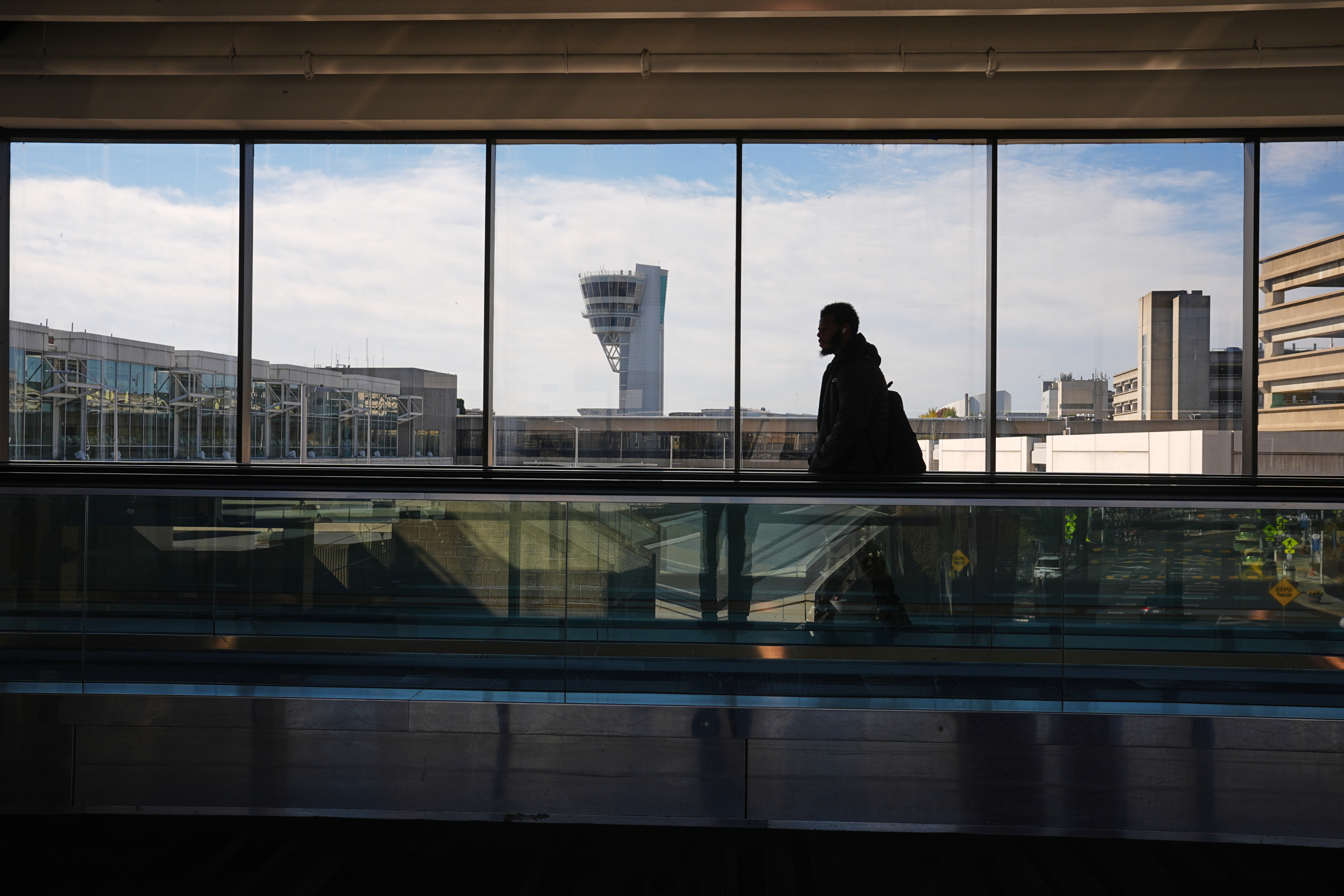
Airports in New York, Los Angeles and Chicago are among 40 of the busiest across the U.S. where flights will be cut starting Friday due to the government shutdown, according to a list distributed to the airlines and obtained by The Associated Press.

The Federal Aviation Administration announced Wednesday it would reduce air traffic by 10% across “high-volume” markets to maintain travel safety as air traffic controllers go unpaid and exhibit signs of strain during the shutdown.

The affected airports in more than two dozen states include the busiest ones across the U.S., including Atlanta, Denver, Dallas, Orlando, Miami, and San Francisco. In some of the biggest cities — such as New York, Houston and Chicago — multiple airports will be affected.

The FAA is imposing the flight reductions to relieve pressure on air traffic controllers who are working without pay during the government shutdown and have been increasingly calling off work. The move also comes as the Trump administration is ramping up pressure on Democrats in Congress to end the shutdown.

Controllers already have missed one full paycheck and are scheduled to again receive nothing next week as the shutdown drags on.

The FAA has been delaying flights at times when airports or its other facilities are short on controllers.

Airlines shuffling schedules

Passengers should start to be notified about cancellations Thursday. Airlines said they would try to minimize the impact on customers, some of whom will see weekend travel plans disrupted with little notice.

United Airlines said it would focus the cuts on smaller regional routes that use smaller planes. United, Delta Air Lines and American Airlines said they would offer refunds to passengers who opt not to fly, even if they purchased tickets that aren’t normally refundable.

The head of Frontier Airlines recommended that travelers buy backup tickets with another airline to avoid being stranded.

The cuts could affect as many as 1,800 flights, or upwards of 268,000 passengers, per day, according to an estimate by aviation analytics firm Cirium.

Airlines routinely cut thousands of flights when a major snowstorm moves across the country in the wintertime. Last January, more than 2,000 flights were cancelled on one day as a storm moved across Texas, Louisiana and much of the Gulf coast.

The difference is that these cuts being made during the shutdown will last indefinitely until safety data improves.

“I’m not aware in my 35-year history in the aviation market where we’ve had a situation where we’re taking these kinds of measures,” FAA administrator Bryan Bedford said Wednesday. “We’re in new territory in terms of government shutdowns.”

Air traffic controllers have been working unpaid since the shutdown began Oct. 1. Most work mandatory overtime six days a week, leaving little time for side jobs to help cover bills and other expenses unless they call out.

Shutdown already straining airlines

Mounting staffing pressures are forcing the agency to act, Bedford said.

“We can’t ignore it,” he said.

Bedford and Transportation Secretary Sean Duffy said Wednesday that they would meet with airline executives to figure out how to safely implement the reductions.

Major airlines, aviation unions and the broader travel industry have been urging Congress to end the shutdown, which on Wednesday became the longest on record.

The shutdown is putting unnecessary strain on the system and “forcing difficult operational decisions that disrupt travel and damage confidence in the U.S. air travel experience,” said U.S. Travel Association President and CEO Geoff Freeman in a statement.

Duffy warned earlier this week that there could be chaos in the skies if the shutdown drags on long enough for air traffic controllers to miss their second full paycheck next week.

He said some controllers can get by missing one paycheck, but not two or more.

Controller staffing worsening

Staffing can run short both in regional control centers that manage multiple airports and in individual airport towers, but they don’t always lead to flight disruptions. Throughout October, flight delays caused by staffing problems had been largely isolated and temporary.

But the past weekend brought some of the worst staffing issues since the start of the shutdown.

From Friday to Sunday evening, at least 39 air traffic control facilities reported potential staffing limits, according to an Associated Press analysis of operations plans shared through the Air Traffic Control System Command Center system. The figure, which is likely an undercount, is well above the average for weekends before the shutdown.

___

Associated Press journalist Christopher L. Keller contributed from Albuquerque, New Mexico.

Slime, Battleship and Trivial Pursuit join the Toy Hall of Fame

Slime, Battleship and Trivial Pursuit join the Toy Hall of Fame

By CAROLYN THOMPSON Associated Press

Slime, that gooey, sticky and often-homemade plaything, was enshrined into the National Toy Hall of Fame on Thursday along with perennial bestselling games Battleship and Trivial Pursuit.

Each year, the Hall of Fame recognizes toys that have inspired creative play across generations, culling its finalists from among thousands of nominees sent in online. Voting by the public and a panel of experts decides which playthings will be inducted.

Milton Bradley’s Battleship, a strategy game that challenges players to strike an opponent’s warships, and Trivial Pursuit, which tests players’ knowledge in categories like geography and sports, have each sold more than 100 million copies over several decades, according to the Hall of Fame.

Battleship started as a pencil-and-paper game in the 1930s, but it was Milton Bradley’s 1967 plastic edition with fold-up stations and model ships that became a hit with the public. Its popularity crested when Universal Pictures and Hasbro, which now owns Milton Bradley, released the 2012 movie, “Battleship,” loosely based on the game. Battleship was also among the first board games to be computerized in 1979, according to the Hall of Fame, and now there are numerous, electronic versions.

Trivial Pursuit lets players compete alone or in teams as they maneuver around a board answering trivia questions in exchange for wedges in a game piece. Canadian journalists Chris Haney and Scott Abbott came up with the game in 1979 and eventually sold the rights to Hasbro. Frequently updated, specialty versions have emerged for young players, baby boomers and other segments and an online daily quiz keeps players engaged, chief curator Chris Bensch said.

Slime’s appeal is more about squish than skill.

It was introduced commercially in 1976 and has been manufactured under various brand names, but it is even more accessible as a do-it-yourself project. The internet offers a variety of recipes using ingredients like baking soda, glue and contact lens solution.

“Though slime continues to carry icky connotations to slugs and swamps — all part of the fun for some — the toy offers meaningful play,” curator Michelle Parnett-Dwyer said, adding that it’s also used for stress relief and building motor skills.

The honorees will be on permanent display at the Hall of Fame inside The Strong National Museum of Play in Rochester, New York.

This year’s inductees were voted in over other nominees including the games Catan and Connect Four, the Spirograph drawing device, the “Star Wars” lightsaber, Furby and Tickle Me Elmo. They also beat out classics including scooters, cornhole and snow.

← Older posts
Newer posts →

Recent News

Tending God’s earth: a journey of faith through gardening

This NC plant eats bugs for breakfast — and looks beautiful doing it

Composting Made Easy: Tips from the WPTF Weekend Gardener

Ironweed: The resilient perennial transforming North Carolina landscapes

One year later, western North Carolina still recovers from Hurricane Helene

Russian sage: Not from Russia, but perfect for NC gardens

Sweet autumn clematis charms, but NC experts say avoid it

Red and black chokeberries thrive in North Carolina landscapes

Bottlebrush blooms, fall color make Clethra a versatile shrub

Find zen in your garden with zinnias

  • Pulse FM

  • NewsRadio680 WPTF

  • 94.7 QDR

  • KIX 102.9

  • La Ley

  • 96.1 BBB

Copyright © 2025 WQDR-AM. All rights reserved
  • Advertising
  • Privacy Policy
  • Terms of Service
  • Contest Rules
  • EEO
  • Public Inspection File: WQDR-AM
  • Employment Opportunities
  • FCC Applications
Powered By SoCast