Thought of the Day
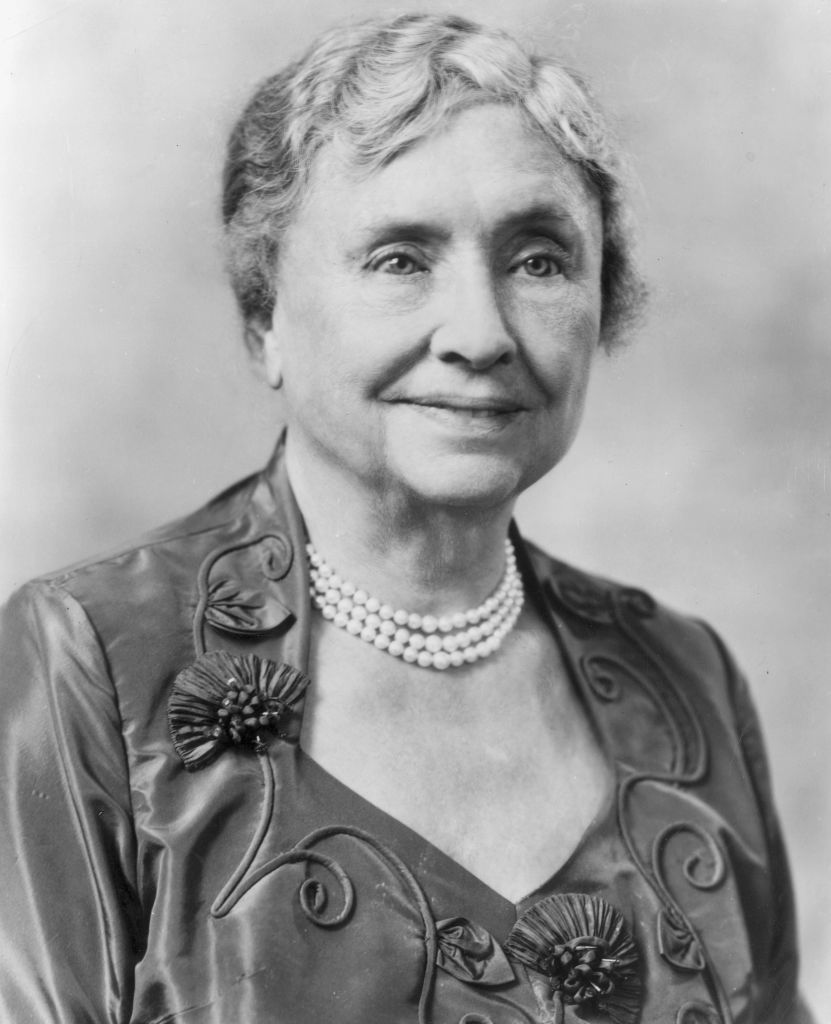
“A well-educated mind will always have more questions than answers.” – Helen Keller
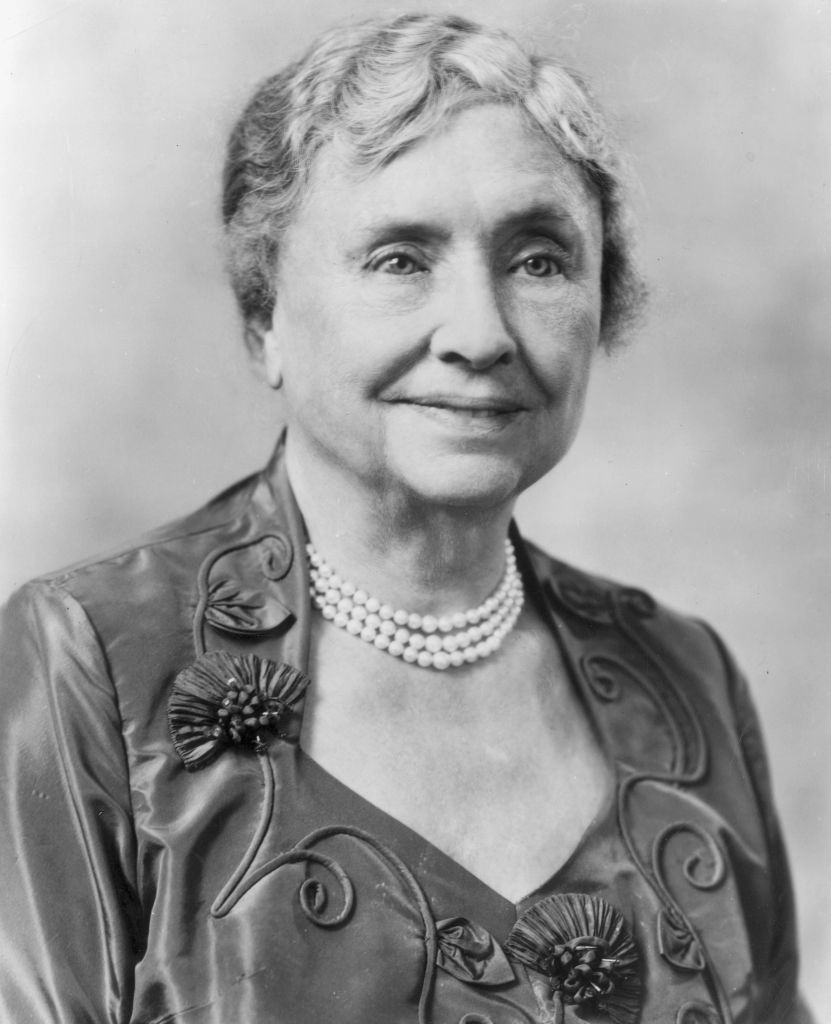
“A well-educated mind will always have more questions than answers.” – Helen Keller

By LISA MASCARO AP Congressional Correspondent
WASHINGTON (AP) — After refusing to convene the U.S. House during the government shutdown, Speaker Mike Johnson is recalling lawmakers back into session — and facing an avalanche of pent-up legislative demands from those who have largely been sidelined from governing.
Hundreds of representatives are preparing to return Wednesday to Washington after a nearly eight-week absence, carrying a torrent of ideas, proposals and frustrations over work that has stalled when the Republican speaker shuttered the House doors nearly two months ago.
First will be a vote to reopen the government. But that’s just the start. With efforts to release the Jeffrey Epstein files and the swearing in of Arizona’s Rep.-elect Adelita Grijalva, the unfinished business will pose a fresh test to Johnson’s grip on power and put a renewed focus on his leadership.
“It’s extraordinary,” said Matthew Green, a professor at the politics department at The Catholic University of America.
“What Speaker Johnson and Republicans are doing, you have to go back decades to find an example where the House — either chamber — decided not to meet.”
When the House gavels back into session, it will close this remarkable chapter of Johnson’s tenure when he showed himself to be a leader who is quietly, but brazenly, willing to upend institutional norms in pursuit of his broader strategy, even at the risk of diminishing the House itself.
Rather than use the immense powers of the speaker’s office to forcefully steer the debate in Congress, as a coequal branch of the government on par with the executive and the courts, Johnson simply closed up shop — allowing the House to become unusually deferential, particularly to President Donald Trump.
Over these past weeks, the chamber has sidestepped its basic responsibilities, from passing routine legislation to conducting oversight. The silencing of the speaker’s gavel has been both unusual and surprising in a system of government where the founders envisioned the branches would vigorously protect their institutional prerogatives.
“You can see it is pretty empty around here,” Johnson, R-La., said on day three of the shutdown, tour groups no longer crowding the halls.
“When Congress decides to turn off the lights, it shifts the authority to the executive branch. That is how it works,” he said, blaming Democrats, with their fight over health care funds, for the closures.
The speaker has defended his decision to shutter the House during what’s now the longest government shutdown in U.S. history. He argued that the chamber, under the GOP majority, had already done its job passing a stopgap funding bill in September. It would be up to the Senate to act, he said.
When the Senate failed over and over to advance the House bill, more than a dozen times, he refused to enter talks with the other leaders on a compromise. Johnson also encouraged Trump to cancel an initial sit-down with the Democratic leaders Sen. Chuck Schumer and Rep. Hakeem Jeffries to avoid a broader negotiation while the government was still closed.
Instead, the speaker, whose job is outlined in the Constitution, second in line of succession to the presidency, held held almost daily press conferences on his side of the Capitol, a weekly conference call with GOP lawmakers, and private talks with Trump. He joined the president for Sunday’s NFL Washington Commanders game as the Senate was slogging through a weekend session.
“People say, why aren’t you negotiating with Schumer and Jeffries? I quite literally have nothing to negotiate,” Johnson said at one point.
“As I’ve said time and time again, I don’t have anything to negotiate with,” he said on day 13 of the shutdown. “We did our job. We had that vote.”
And besides he said of the GOP lawmakers, “They are doing some of their best work in the district, helping their constituents navigate this crisis.”
In many ways, Johnson has become a surprisingly effective leader, an accidental speaker who was elected to the job by his colleagues after all others failed to win it. He has now lasted more than two years, longer than many once envisioned.
This year, with Trump’s return to the White House, the speaker has commandeered his slim GOP majority and passed legislation including the president’s so-called “one big beautiful bill” of tax breaks and spending reductions that became law this summer.
Johnson’s shutdown strategy also largely achieved his goal, forcing Senate Democrats to break ranks and approve the funds to reopen government without the extension of health care subsidies they were demanding to help ease the sticker shock of rising insurance premium costs with the Affordable Care Act.
Johnson’s approach is seen as one that manages up — he stays close to Trump and says they speak often — and also hammers down, imposing a rigid control over the day-to-day schedule of the House, and its lawmakers.
Under a House rules change this year, Johnson was able to keep the chamber shuttered indefinitely on his own, without the usual required vote. This year his leadership team has allowed fewer opportunities for amendments on legislation, according to a recent tally. Other changes have curtailed the House’s ability to provide a robust check on the executive branch over Trump’s tariffs and use of war powers.
Johnson’s refusal to swear-in Grijalva is a remarkable flex of the speaker’s power, leading to comparisons with Senate GOP Leader Mitch McConnell’s decision not to consider President Barack Obama’s Supreme Court nominee, said David Rapallo, an associate professor and director of the Federal Legislation Clinic at Georgetown University Law Center. Arizona has sued to seat her.
Marc Short, who headed up the White House’s legislative affairs office during the first Trump administration, said of Johnson, “It’s impressive how he’s held the conference together.”
But said Short, “The legislative branch has abdicated a lot of responsibility to the executive under his watch.”
As lawmakers make their way back to Washington, the speaker’s power will be tested again as they consider the package to reopen government.
Republicans are certain to have complaints about the bill, which funds much of the federal government through Jan. 30 and keeps certain programs including agriculture, military construction and veterans affairs running through September.
But with House Democratic leaders rejecting the package for having failed to address the health care subsidies, it will be up to Johnson to muscle it through with mostly GOP lawmakers — with hardly any room for defections in the chamber that’s narrowly split.
Jeffries, who has criticized House Republicans for what he called an extended vacation, said, “They’re not going to be able to hide this week when they return.”

This recipe is a lifesaver on busy mornings. It’s super easy to prep, and makes for a great start to your day.
Optional Flavor Combos:
1. Make the base
In a jar or container with a lid, combine the oats, milk, yogurt, sweetener, vanilla and salt. Stir well.
2. Add the toppings
Add your desired flavor mix-ins. (see ideas above or make it your own!)
3. Refrigerate
Cover and refrigerate overnight for at least 6 hours.
4. Finishing touches
In the morning, stir and add a splash of milk if it’s too thick and top with fresh fruit, nuts, or seeds before serving.
5. Enjoy
Grab a spoon and enjoy at home or on-the-go!


Mondays are for people with a mission.
By MARY CLARE JALONICK and LISA MASCARO Associated Press
WASHINGTON (AP) — The Senate passed legislation Monday to reopen the government, bringing the longest shutdown in history closer to an end as a small group of Democrats ratified a deal with Republicans despite searing criticism from within their party.
The 41-day shutdown could last a few more days as members of the House, which has been on recess since mid-September, return to Washington to vote on the legislation. President Donald Trump has signaled support for the bill, saying Monday that “we’re going to be opening up our country very quickly.”
The final Senate vote, 60-40, broke a grueling stalemate that lasted more than six weeks as Democrats demanded that Republicans negotiate with them to extend health care tax credits that expire Jan. 1. The Republicans never did, and five moderate Democrats eventually switched their votes as federal food aid was delayed, airport delays worsened and hundreds of thousands of federal workers continued to go unpaid.
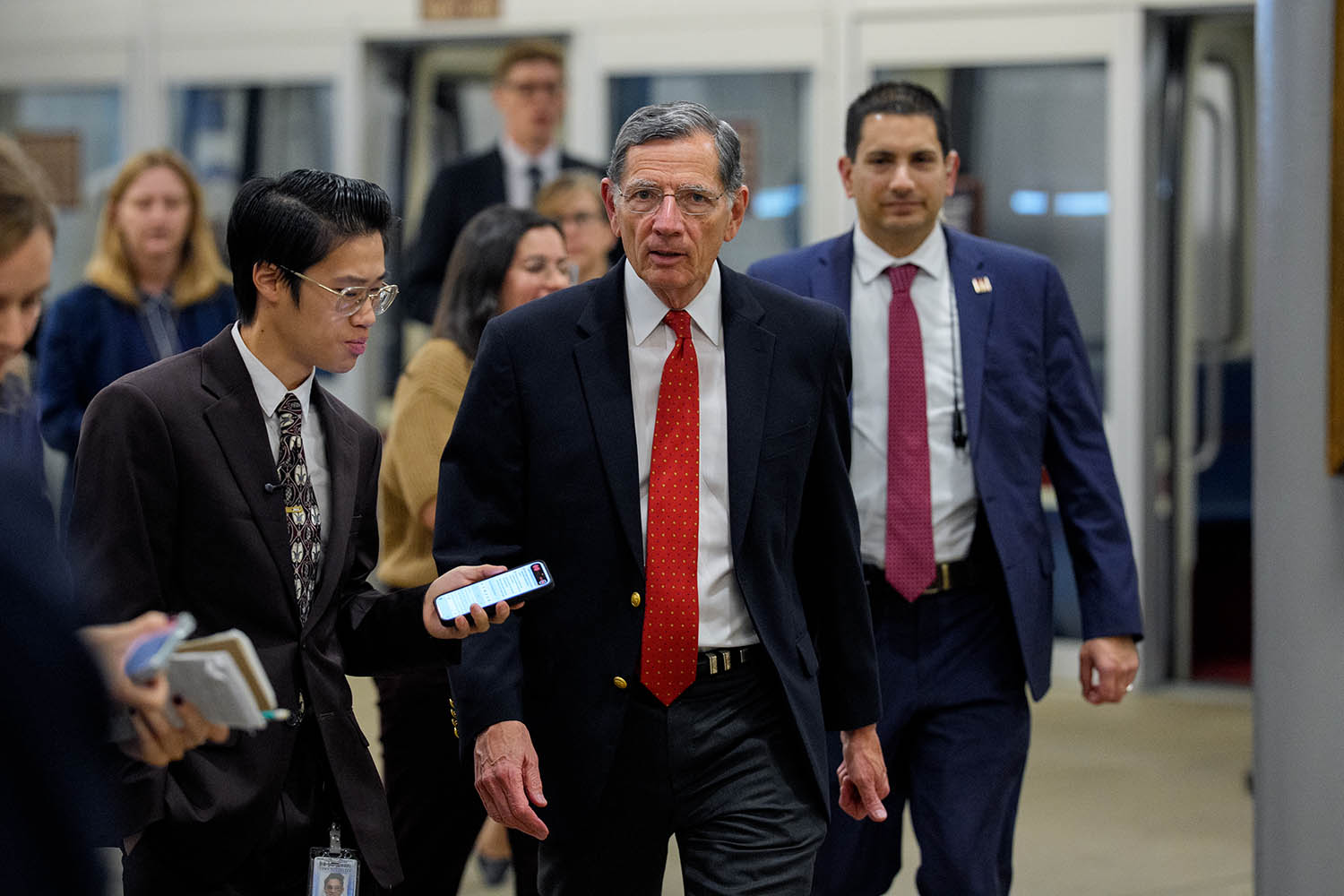
After the vote, Senate Majority leader John Thune, R-S.D., thanked unpaid staff and Capitol Police who stood near him on the floor. He said he realized the strain had been immense for “six excruciating weeks.”
“I am very, very happy to be able to say we are coming to the end,” Thune said.
House Speaker Mike Johnson urged lawmakers to start returning to Washington “right now” given shutdown-related travel delays. “We have to do this as quickly as possible,” said Johnson, who has kept the House out of session since mid-September, when the House passed a bill to continue government funding.
After weeks of negotiations, A group of three former governors — New Hampshire Sen. Jeanne Shaheen, New Hampshire Sen. Maggie Hassan and Independent Sen. Angus King of Maine — agreed to vote to advance three bipartisan annual spending bills and extend the rest of government funding until late January. Republicans promised to hold a vote to extend the health care subsidies by mid-December, but there was no guarantee of success.
Shaheen said Monday that “this was the option on the table” after Republicans had refused to budge.
“We had reached a point where I think a number of us believed that the shutdown had been very effective in raising the concern about health care,” she said, and the promise for a future vote “gives us an opportunity to continue to address that going forward.”
The legislation includes a reversal of the mass firings of federal workers by the Trump administration since the shutdown began on Oct. 1. It also protects federal workers against further layoffs through January and guarantees they are paid once the shutdown is over.
In addition to Shaheen, King and Hassan, Democratic Sen. Tim Kaine of Virginia, home to tens of thousands of federal workers, also voted Sunday in favor of moving forward on the agreement. Illinois Sen. Dick Durbin, the No. 2 Democrat, Pennsylvania Sen. John Fetterman and Nevada Sens. Catherine Cortez Masto and Jacky Rosen also voted yes. All other Democrats, including Senate Democratic leader Chuck Schumer of New York, voted against it.
The moderates had expected a larger number of Democrats to vote with them as 10 to 12 Democratic senators had been part of the negotiations. But in the end, only five switched their votes — the exact number that Republicans needed. King, Cortez Masto and Fetterman had already been voting to open the government since Oct. 1.
Schumer, who received blowback from his party in March when he voted to keep the government open, said he could not “in good faith” support it after meeting with his caucus for more than two hours on Sunday.
“We will not give up the fight,” Schumer said, adding that Democrats have now “sounded the alarm” on health care.
Connecticut Sen. Chris Murphy said “we could have won” and giving up will only embolden Trump. He said voters were on their side after overwhelming wins for Democrats in last week’s elections.
“We were building momentum to help save our democracy,” Murphy said.
Independent Sen. Bernie Sanders of Vermont said that striking a deal was “a horrific mistake.”
Others gave Schumer a nod of support. House Democratic leader Hakeem Jeffries had criticized Schumer in March after his vote to keep the government open. But he praised the Senate Democratic leader on Monday and expressed support for his leadership throughout the shutdown.
“The American people know we are on the right side of this fight,” Jeffries said Monday, pointing to Tuesday’s election results.
It’s unclear whether the two parties would be able to find any common ground on the health care subsidies before a promised December vote in the Senate. House Speaker Mike Johnson, R-La., has said he will not commit to bringing it up in his chamber.
On Monday, Johnson said House Republicans have always been open to voting to reform what he called the “unaffordable care act” but again did not say if they would vote on the subsidies.
Some Republicans have said they are open to extending the COVID-19-era tax credits as premiums could skyrocket for millions of people, but they also want new limits on who can receive the subsidies. Some argue that the tax dollars for the plans should be routed through individuals.
Senate Appropriations Committee Chairwoman Susan Collins said Monday that she’s supportive of extending the tax credits with changes, like new income caps. Some Democrats have signaled they could be open to that idea.
“We do need to act by the end of the year, and that is exactly what the majority leader has promised,” Collins said.
Other Republicans, including Trump, have used the debate to renew their yearslong criticism of the law and called for it to be scrapped or overhauled.
In a possible preview, the Senate voted 47-53 along party lines Monday not to extend the subsidies for a year. Majority Republicans allowed the vote as part of a separate deal with Democrats to speed up votes and send the legislation to the House.
___
Associated Press writers Seung Min Kim, Michelle Price and Stephen Groves contributed to this report.

ASHEVILLE, N.C. (AP) — The PGA Tour is returning to the Blue Ridge Mountains of North Carolina for the first time in 86 years, announcing Monday a FedEx Cup Fall event starting next September to be sponsored by the Biltmore Estate and Explore Asheville.
The Biltmore Championship in Asheville is scheduled for Sept. 17-20, 2026, the second new fall event the tour has announced in the last month. It will be held at The Cliffs at Walnut Cove, a Jack Nicklaus signature design.
North Carolina already has the Truist Championship in Charlotte (May) and Wyndham Championship in Greensboro (August).
The PGA Tour was last in Asheville in 1942, a four-year run of a tournament called Land of the Sky Open. Ben Hogan won his first individual tour title in 1940, the start of winning three in a row at Asheville.
It was held a week before the Masters from 1940 through 1942. Now it will be the third week in September at a time most players are simply trying to retain their PGA Tour cards.
The LPGA Tour played in Asheville from 1957 through 1960.
The announcement of the four-year deal with Asheville adds to a growing Fall 2026 schedule. The Good Good Championship in Austin, Texas, will be Nov. 12-15. Other Fall Series events for 2026 include stops in Utah, Japan, Mexico, Bermuda and the southeast Georgia coast.
By MARK SHERMAN Associated Press
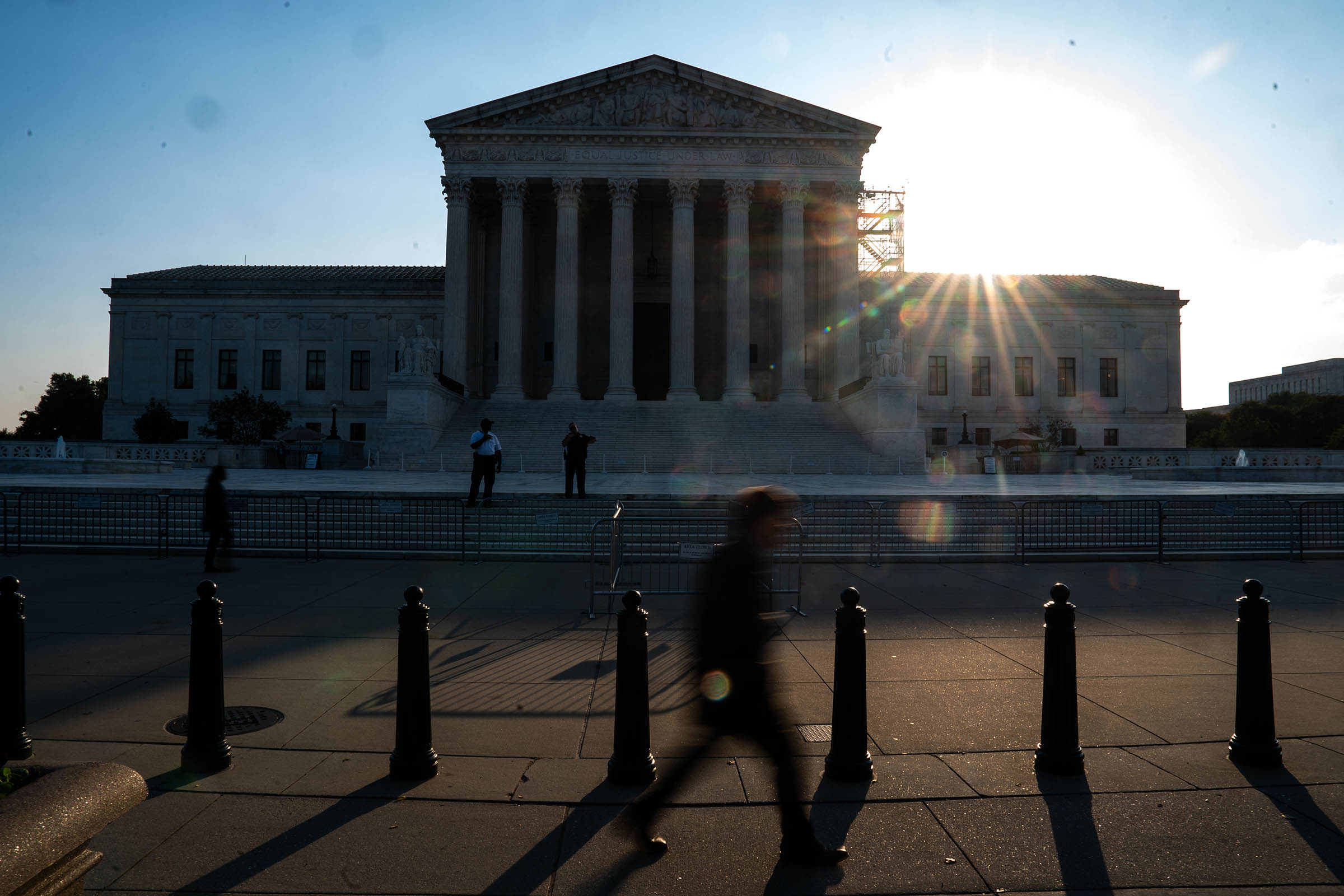
WASHINGTON (AP) — The Supreme Court on Monday rejected a call to overturn its landmark decision that legalized same-sex marriage nationwide.
The justices, without comment, turned away an appeal from Kim Davis, the former Kentucky court clerk who refused to issue marriage licenses to same-sex couples after the high court’s 2015 ruling in Obergefell v. Hodges.
Davis had been trying to get the court to overturn a lower-court order for her to pay $360,000 in damages and attorney’s fees to a couple denied a marriage license.
Her lawyers repeatedly invoked the words of Justice Clarence Thomas, who alone among the nine justices has called for erasing the same-sex marriage ruling.
Thomas was among four dissenting justices in 2015. Chief Justice John Roberts and Justice Samuel Alito are the other dissenters who are on the court today.
Roberts has been silent on the subject since he wrote a dissenting opinion in the case. Alito has continued to criticize the decision, but he said recently he was not advocating that it be overturned.
Justice Amy Coney Barrett, who was not on the court in 2015, has said that there are times when the court should correct mistakes and overturn decisions, as it did in the 2022 case that ended a constitutional right to abortion.
But Barrett has suggested recently that same-sex marriage might be in a different category than abortion because people have relied on the decision when they married and had children.
Human Rights Campaign president Kelley Robinson praised the justices’ decision not to intervene. “The Supreme Court made clear today that refusing to respect the constitutional rights of others does not come without consequences,” Robinson said in a statement.
Davis drew national attention to eastern Kentucky’s Rowan County when she turned away same-sex couples, saying her faith prevented her from complying with the high court ruling. She defied court orders to issue the licenses until a federal judge jailed her for contempt of court in September 2015.
She was released after her staff issued the licenses on her behalf but removed her name from the form. The Kentucky legislature later enacted a law removing the names of all county clerks from state marriage licenses.
Davis lost a reelection bid in 2018.

This recipe is cozy, unique and can last for multiple meals! It’s super flavorful and you can customize the protein and spices to your preferences.
1. Cook the protein
In a large pot, heat olive oil over medium heat. Add sausage (or protein of choice) and cook until browned, breaking it apart with a spoon. Drain excess fat if needed.
2.Add onion, tomato paste and spices
Add onion and cook 3–4 minutes, until softened. Stir in garlic, oregano, basil, and red pepper flakes, then cook for 1 more minute. Then, stir in the tomato paste and cook for 1–2 minutes to deepen flavor.
3. Add thickeners
Pour in crushed tomatoes, broth, and marinara (if using). Bring to a boil, then reduce to a simmer.
4. Add the noodles
Add the broken lasagna noodles and simmer uncovered for 12–15 minutes, stirring occasionally, until noodles are tender. Meanwhile, in a small bowl, mix ricotta, mozzarella, Parmesan and herbs.
5. Serve it hot
Spoon into bowls and top with the cheese mixture, and enjoy this hearty and cozy soup.


Doubt whom you will, but never yourself.

CHAPEL HILL, N.C. (AP) — No. 25 North Carolina senior guard Seth Trimble is out indefinitely after suffering a broken left forearm during a workout on Sunday.
The school said a timetable for Trimble’s return will be determined following surgery this week.
“So sad for Seth,” North Carolina coach Hubert Davis said in a statement. “He’s such a great kid and teammate and has worked so hard for his senior year. He loves being a Tar Heel and we love him. The good news is he will be back at some point this year, and I know he will continue to be a great leader for us until he can get back in the lineup.”
Trimble entered the season as a team leader on a roster with 11 new players and had a huge immediate impact in the Tar Heels’ 87-74 win over No. 19 Kansas on Friday.
The 6-foot-3, fourth-year player rebounded from a quiet first half to score 13 of his 17 points in the second as North Carolina rallied from an eight-point halftime deficit. Trimble also played a crucial role defensively, helping to slow Kansas star freshman Darryn Peterson in the second half.
Trimble averaged 11.7 points per game last season, an increase of more than six points from 2023-24.